


As my guest Sophie Gilbert puts it, “conservation should define winning as getting to more nature, not just slowing down loss.” Doing so requires asking not what should be stopped, but “what do we want more of and how do we get it?” The answer is conservation abundance.
In this conversation, Sophie shares her take on the cultural changes pushing conservation towards yes on the environment, energy, and housing. We discuss why permitting reform is a necessary for nature restoration, and she screeches like a pika.
Transcript:
Editor’s note: The transcript has been edited for clarity and brevity.
What is conservation abundance?
Grant Mulligan: Welcome Sophie. Thanks for joining me today!
Sophie Gilbert: Hey Grant, so great to be here with you. I’m excited.
Grant: By way of quick introduction you are a Senior Researcher at PERC or the Property and Environment Research Center. Previously, you’ve been a professor of wildlife ecology, you’ve worked in nature-based solution startups, and like me, you’ve been a fellow at the The Roots of Progress, and you write the excellent Substack More Nature Please!
I invited you to do this because we actually haven’t known each other that long. It’s been about a year. We found each other because I wrote an essay about the Abundance Conference, Abundance is how we deliver on the promise of liberty. A mutual friend read it and put us in touch, and I read some of your stuff and thought it was excellent. We immediately bonded as these abundance-pilled ex-wildlife biologists who want a more dynamic conservation environmental community.
I want to have a conversation about what the future of conservation looks like and what “conservation abundance” is. You just hosted an excellent workshop, the Conservation Abundance Workshop in Fort Collins that left me incredibly inspired. And not in the navel gazy, “wouldn’t it be great if” way, but in a “there’s real work to do” way. Work we’ve already started because of that workshop. There were only 43 people in that workshop. How do we push some of these ideas out there further? So I’m hoping you can just start us off by answering what the heck is conservation abundance?
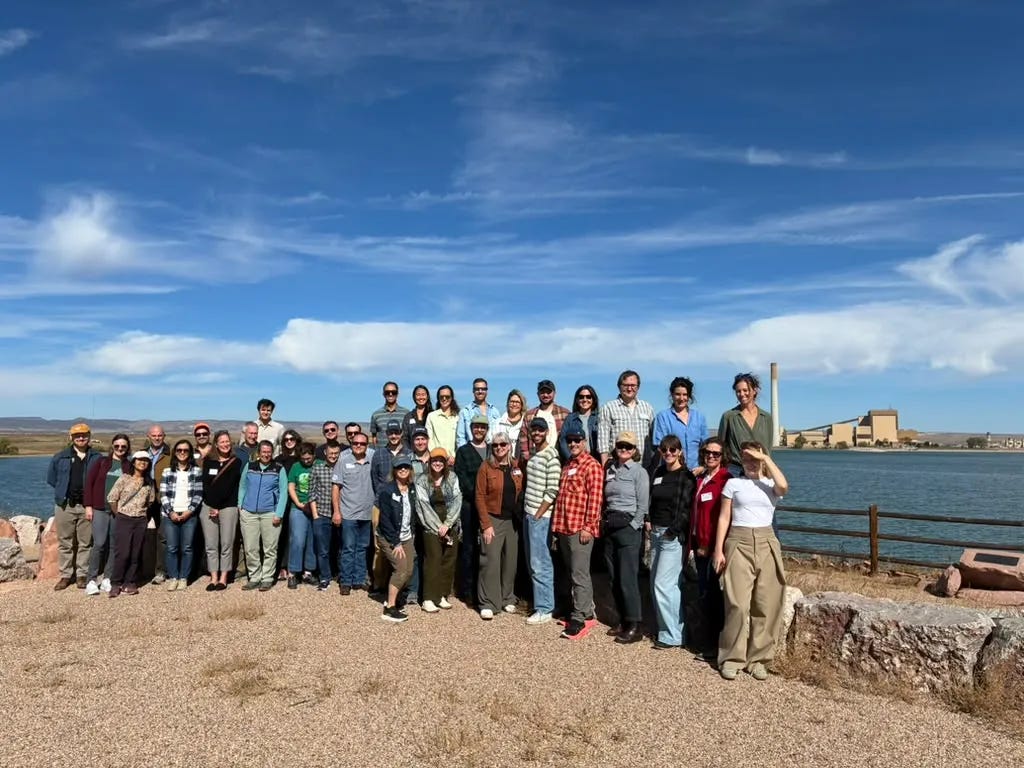
Sophie: I’m so glad that you were able to come to the workshop, Grant. I feel like part of what we were trying to discover at that workshop is what is conservation abundance? But I do, of course, have my own definition in my head and I’m happy to share that with you.
I feel like you and I both kind of came up at the same time through the ecology and wildlife biology worlds where it really felt like, for me at least, winning was framed as let’s just lose more slowly. And that’s the win. Can we slow down the losses? Can we dig our heels in a little harder and pull back in a way that protects the remnants of what we care about in nature? And that was just really depressing, but I accepted it as reality for a long time. But I’m here to say that I don’t think that’s true anymore.
We are still watching the decline of some things we care about very much, but also we have so many more tools than we’ve ever had to turn that ship around towards recovery and rebuilding the abundance of nature and doing that in ways that make people part of the solution.
Now, I’m very passionate about figuring out how we build more good things for people and nature. And I would say that question is the core of conservation abundance. Figuring out how to build more good things for people and nature and doing that by asking, what do we want more of and how do we get it instead of just what do we want to stop?
Grant: I love that framing of “what do we want more of?” Because I think you’re exactly right. Conservation has been about let’s conserve the last of something. Let’s put a fence around this park, this last beautiful geography or species, and we’ll protect it. Instead of being about “what do we want more of?” How do we make more nature better for humans, better for nature, everybody?1
Sophie: Protecting those last things is the first step in regrowing it, right? We got down to less than thirty wild bison in America. We got down to a couple hundred grizzly bears in the lower 48. We almost had wolves gone. We did lose species like the Carolina parakeet, the passenger pigeon. So I just wanna acknowledge that there is a role for that kind of standing there with a sword and shield defending the last of. But if that’s all you do, if you don’t then figure out, okay, how do we recover and regrow, you’re gonna be in that defensive crouch forever. And you can’t defend everything all at once. You’re gonna keep seeing losses come over the board. We need to, if we really want more nature, we need to figure out how to rebuild and regrow.
Personally, the reason abundance is in that framing is, I read the book like everybody else. I’m such a nerd. I was following along with Ezra Klein and Derek Thompson as they were kind of spitballing the ideas in blogs and podcasts. You could see them working on a big idea, kind of working it out in public. It really spoke to me. I took their question as very generative, ask yourself what you want more of and then dismantle the barriers to getting it. And do that in a very systematic way to develop your theory of change.
I asked, “how does that apply to my work with nature?” I think there are a lot of artificial scarcities, as they would put it, chosen scarcities created by our own rules and processes. Some of those are blocking nature recovery in some profound ways. And I really want to see the conservation and environmental world start to care much more actively about humans and human habitat because those two are intimately connected. You don’t get thriving nature and desperate, hungry, unhoused humans side by side. That’s not a real scenario. You need thriving people to have thriving nature.
Grant: I love it. That need for thriving people alongside nature as a key ingredient can sometimes get lost in the environmental narrative. Environmentalism is often seen as degrowth.
Sophie: I grew up in a very degrowth household (love you, mom and dad!). But I remember, at the kitchen table, pretty young, a very vivid memory of being asked by my dad to calculate how many generations everyone would have to have one kid to get to the right population size. I took that very seriously. I was an only child, I was like, okay, well, apparently this is really important.
That kind of thinking and that long shadow of Paul Ehrlich, The Population Bomb, if you go back farther, Malthus, has really loomed large and still does. And there’s some truth to it. Anyone who’s taken a basic ecology class, one of the things you study is natural limits to population growth. It can be a number of nest sites, it can be the food supply, it can be disease and predation. Something stops populations from growing.
I think conservationists and ecologists and environmentalists, I’m gonna kind of lump all those people together, really internalized that thinking and applied it to human beings. But humans are weird! For a long time we were a lot like the other creatures and we were limited by those things, but we’ve really transcended a lot of those limits. We have invented and built our way out of a lot of those limits. It doesn’t mean we won’t encounter more limits, and it doesn’t mean we shouldn’t take seriously the natural resource needs of continued growth and progress and being serious about those.
I actually think there’s room in this, in this tent, even for the degrowthers, Grant. Cause I think, hey, you want degrowth? You know how you do it? You make people thrive so much, for example, that women are so educated and empowered that they choose their own number of children. And you know what numbers they choose? It’s not 10, right? It’s not 10. Humans are a very strange, different creature than most of the other creatures.
And that makes the path forward actually weirdly compatible between the growthers and the degrowthers. These top-down solutions don’t work. How did China’s one child policy go? Absolute disaster, right? And they’ve now lifted it. So I actually think there’s a way forward even with that group.
Grant: Part of it is making the argument, to your point, of the ingenuity of humans. Of their ability to actually solve some of these problems. We can’t simply take the model out of wildlife population dynamics that you and I had studied and apply it to human ecosystems in the same way.
Sophie: No, not at all. Some of them are useful frameworks, but they don’t apply measure for measure to humans and how we operate. Humans have politics, humans have science and technology innovation. We have modern chemistry. Think about the agricultural revolution that broke Malthusian thinking across its knees. We have all kinds of amazing things that we’ve invented, and I don’t know what we’ll invent next.
Yes to the environment, energy, and housing! (YEAH!)
Sophie: I think at the heart of a lot of today’s conflicts is something that is fundamentally scarce, and there’s no way around it, and it’s what is driving all of these strange bedfellows and conversations, and that’s land. And Grant, I know you’ve thought a lot about land. There are only so many pixels, so many squares of terrestrial surface in this world, and it makes them very precious and very worth thinking about carefully.
It’s where wildlife live or could live, it’s where people live or could live, it’s where we could or could not grow food. Those choices and getting those choices right are really, really important. I think that’s where human abundance and nature abundance really have a lot to say to each other.
Grant: At the Conservation Abundance Workshop, you talked a lot about nature, housing, and energy as key pieces of the puzzle. And it all comes back to land, right? Why are these three the natural connecting points? What is it about those three systems in particular that they all fall under this idea of conservation abundance?
Sophie: Energy and housing are maybe the two most top-of-mind components of what makes good human habitat. But I’ll just say this human habitat is much more complicated than that. Transit, walkability, shape and structure of a neighborhood. Is it granular and satisfying? And are there commercial clusters close enough to where you live and green space to help you get that connection with nature and calm down and feel better.
I think it’s so funny—as a wildlife biologist, I’m infinitely interested in what makes great habitat for deer or pika or whatever it is. And it’s pretty easy to turn that lens towards humans and wonder, what do humans like? What do we really enjoy about habitat? And it’s made me realize that’s what urbanists are all about, right? They’re trying to figure out what makes the best human habitat and how to build it. They’re just like me, actually.
Grant: Watching you do that at Lighthaven at the Progress Conference a couple of weeks ago, where you were walking around commenting that they’ve really figured out this idea of human habitat. They have these little nooks to sit in and places to go. You had it dialed. You were looking at that Lighthaven like a wildlife biologist studies pika habitat.
Sophie: That was some incredible human habitat. It was just ideal. Something for everybody. Everyone felt safe and sheltered and yet there was flow. Everyone knew where to find the food. The kitchen was definitely the hot spot at all times—central place foraging, we could get really nerdy about it.


Talking to planners, urbanists, and the YIMBY crowd I think they can really recognize themselves in our conversation about what makes good habitat for wildlife and plants. They’re feeling that same pinch, that same there’s not enoughness, that same scarcity, and that same desire to rebuild and regrow something good and thriving and rich.
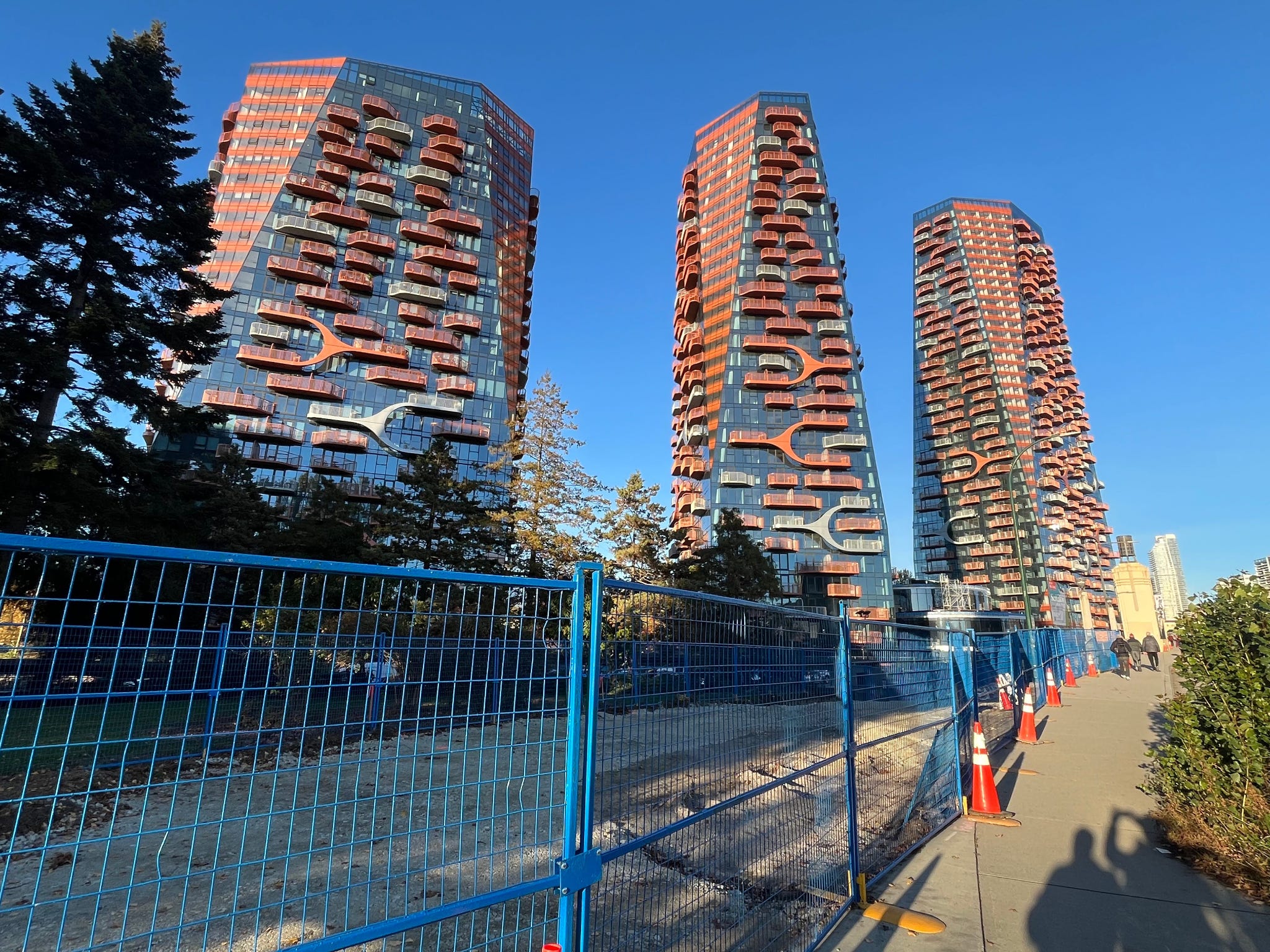
I think it feels like we’re fighting about the same pixels of land but part of that is because the current system makes it so. The default setting for where we put stuff is out, not up, and yet you look at the great cities of the world and there are these awesome vertical, crazy coral reefs of upness. I’m not saying everything has to be up all the time, but I think that the fights about pixels don’t have to be nearly as profound and divisive as they are. Just because we’ve defaulted to sprawl for half a century doesn’t mean we have to in the future. And I’m not saying that people who want a backyard can’t have one full stop, but I think you look at the numbers and there’s a lot of pent up demand for richer, denser, better human habitat that we are simply not meeting today.
Grant: And if we meet that, it benefits nature.
Sophie: That’s fewer pixels of sprawl. It’s way better for nature. It’s better for climate, which is to me a facet of better for nature, right? You’d have people spending a lot less time in cars, a lot lower emissions, all of those things. People are probably healthier, frankly, a lot more walking and biking. All that good stuff. So I really see building good human habitat and the YIMBY abundance desire to do that as deeply sympathetic with and complementary to rebuilding natural habitat.
Grant: Not to steal your line, but I’ve repeated it to myself many, many times since the workshop: “all my favorite people live in houses.” It’s one thing to provide for nature, it’s another thing to remember all my favorite people live someplace, too.
Sophie: Yeah. I think I said “I love houses. All my favorite people live in houses.”
Grant: I love that framing so much because it really gets to the heart of these too often zero sum discussions. It’s often framed as development and growth versus nature, and you can only have one or the other. But if you densify housing, you have more houses for the people who need them. All your favorite people can live in a house. You lower the cost of housing. They have more disposable income to go enjoy nature. They’re more inclined to protect nature. And you have land that becomes available that previously was sprawl or agriculture. We can do more from less, marginal farmland can be converted back to nature. Habitat loss is the biggest driver of biodiversity loss, so many of these things really do intersect.
The changing culture of conservation
Sophie: Coming out of that workshop and the last couple of years of this project, I really think, I don’t know if you noticed this too, but cultural change is the hardest part of this. Changing the stories we tell and the way we think about this problem is also maybe the most important.
What is the story we tell ourselves on the environmental side? What is the story we tell about nature as a barrier to progress on the abundance side? We need better stories. I’d love to hear your thoughts on how we change those stories.
Do you change that story by showing practical examples of a different story? Real narratives of success? Do you change it through higher level thought leadership exercises? Do you change it with data-driven science?
Will it change naturally through generational turnover? The younger millennials, and I think you’re an elder millennial like me, but you know, people our age and younger grew up with a very different baseline and very different worries and traumas than people in the environmental world who came up in the seventies and eighties and nineties. How do you think we should change our story, Grant?
Grant: What I see happening, what really hit me at the Conservation Abundance Workshop that you hosted with PERC and EPIC, the Environmental Policy Innovation Center, what jumped out to me was the sense that the Overton window is shifting within the conservation community.
I think there are a few different reasons for that. One you alluded to is a generational component. There was a certain group of people who grew up really worried about peak oil, really worried about The Population Bomb, really worried about Silent Spring, and I actually think Silent Spring’s kind of a progress book, but people interpreted it as progress isn’t coming through with what it promised. That has been taught and perpetuated over and over. In a funny way, I think climate change is part of the reason the Overton window has shifted.
Sophie: Hundred percent.
Grant: People are realizing, oh, well, more industrialization in certain places actually means more food from fewer acres, and that’s acres we can return to nature. You can have economic growth and lower emissions. And there’s a Kuznets curve where as we get wealthier. We can correct a lot of these mistakes. We can have new technologies. And so this Overton window is shifting for a number of different reasons.
And then I think what’s happening, or I hope is happening, is I see a Schumpeter style creative destruction happening where what it takes to be successful is no longer just being a land trust, protecting a piece of land, and creating a park. You’re seeing groups like The Nature Conservancy and Audubon and PERC bringing more market-based solutions and more active management of land to get specific outcomes. For example, permitting reform as a necessity that allows us to get more renewables built.
It’s an innovator’s dilemma moment for these groups. They are kind of changing from within, but you’re also getting these upstarts saying, no, there’s new ways to do restoration and other strategies that I see shifting the industry for a lot of different reasons.
The analogy I used for the first time in the Conservation Abundance Workshop was I feel like I’ve spent 20 years banging my shoulder against a brick wall saying the world’s changing, conservation needs to change, environmentalism needs to change. Now I’m starting to see cracks in the facade. And then you hosted this workshop where it’s the first time I’ve been in a room with 40 plus people who are all at least open to the idea that conservation should be about more nature and more housing. And now I want to bust through that wall like the freaking Kool-Aid Man. I just want to bust through and start doing things differently.
Sophie: I will buy you that big red sweater. Absolutely, Grant. You do have Kool-Aid Man energy in the best possible way. Like that wall, go do that wall next, Grant.

Yeah, I think those are just really wonderful ways to put it for sure. And I also hope I’m not being naive, but I do feel that the winds of change are blowing right now. And I think part of that is that the stucknesses are really coming to a head.
What I see as catalytic for a lot of these groups is just really very, very pragmatic things. They’re receiving a lot of cross pressure, right? They’ve now got donors who are saying, “why are you not helping build transmission and clean energy more? You cannot stand in the way. You need to make this faster.” Even as they have traditional, maybe more traditional-minded donors who are saying, “Stop, make sure you can still stop bad things, you know, the scary things that we don’t like.”
So they’re getting cross pressure from their own donors. I think they have cross pressure from their own staff, anecdotally, talking to people who work in big urban offices for environmental groups, a lot of their younger staff members have hour plus commutes because they cannot afford a house anywhere near that big urban office. Even the not so big offices.
Grant: Yes, I took an hour trip on BART every day to get into the office to go work at The Nature Conservancy.
Sophie: Right. Or you think about somebody working at TNC’s office in Boulder, not too far from you. I imagine a lot of those folks have commutes. I think that’s playing out in people’s staffs, in their donor bases, and also when they’re a membership driven organization. Their membership bases too, to some extent. You get these schisms at these different scales.
You look at Sierra Club, for example, and at the national scale, they sound very pro-housing density and very pro-renewable energy. But they’re a chapter organization. Those top-down policies, they’re not binding on local chapters, so you see these wars breaking out in local chapters where the younger, kind of more YIMBY-oriented members are trying to overturn local chapter opposition to houses and energy projects and getting into a fight with the more traditional stop things, Boomer generation. It’s playing out in very messy ways in public. So the war is breaking out into the open.
I think generational change is important. But also I do think that there is change within individuals. I know people who have profoundly changed in their own lifetimes and not just as youths. Change is always possible, and this is a moment where the logic of change is very strong. It’s very, very strong.
I remember on my own journey out of academia, I spent about a year really thinking very, very hard about climate change and the drivers and solutions. And I remember it wasn’t one aha moment, but in retrospect, we paint it that way. But I came to this very vivid realization and was so excited and angry when I realized that we know like 95% of the solutions to this. We still need to invent some decarbonization pathways for the hard to abate industries and sustainable aviation. What are we gonna do about that? But wow, we already know what to do and how to do it for the most part, and we are simply not doing it fast enough. That made me very hopeful and also very pissed off. I’m like, why? This report says we’re supposed to be building this stuff four times faster. Why aren’t we doing it?
That’s the rabbit hole. I’m not unique, right? Whenever I think something, I realize a lot of other people probably think it too. I think a lot of people are having that aha rabbit hole moment where we’re realizing the solutions require building a lot of good things and we’re simply stopping those good things being built. We’re not doing it fast enough. So I’m not alone in having that aha moment. Or is it BAAJA moment, Grant?
Grant: What a transition! You’re such a pro.

BAAJA, permitting reform, and the cost of delay
Grant: BAAJA, or the Bipartisan American Affordability and Jobs Act, is the permitting reform bill in front of Congress right now.2 And I’m really curious because it’s a test of how fast are the winds really changing? Are we able to bring people along?
At a very high level, it’s a massive bill that seeks to address NEPA, the National Environmental Policy Act, the Clean Water Act, the Endangered Species Act, the National Historic Preservation Act, that have procedural requirements. These often act like the Strait of Hormuz in that they are the bottleneck that stops all kinds of things from happening and can be really controlled by people who are really litigation focused. But NEPA itself is not an environmental law, you can pave paradise as long as you document it properly.
Sophie: Yes. Correct.
Grant: BAAJA is really about how do we adjust that a little bit to streamline things so they can get built a little bit more. But what would you add? How are you seeing BAAJA?
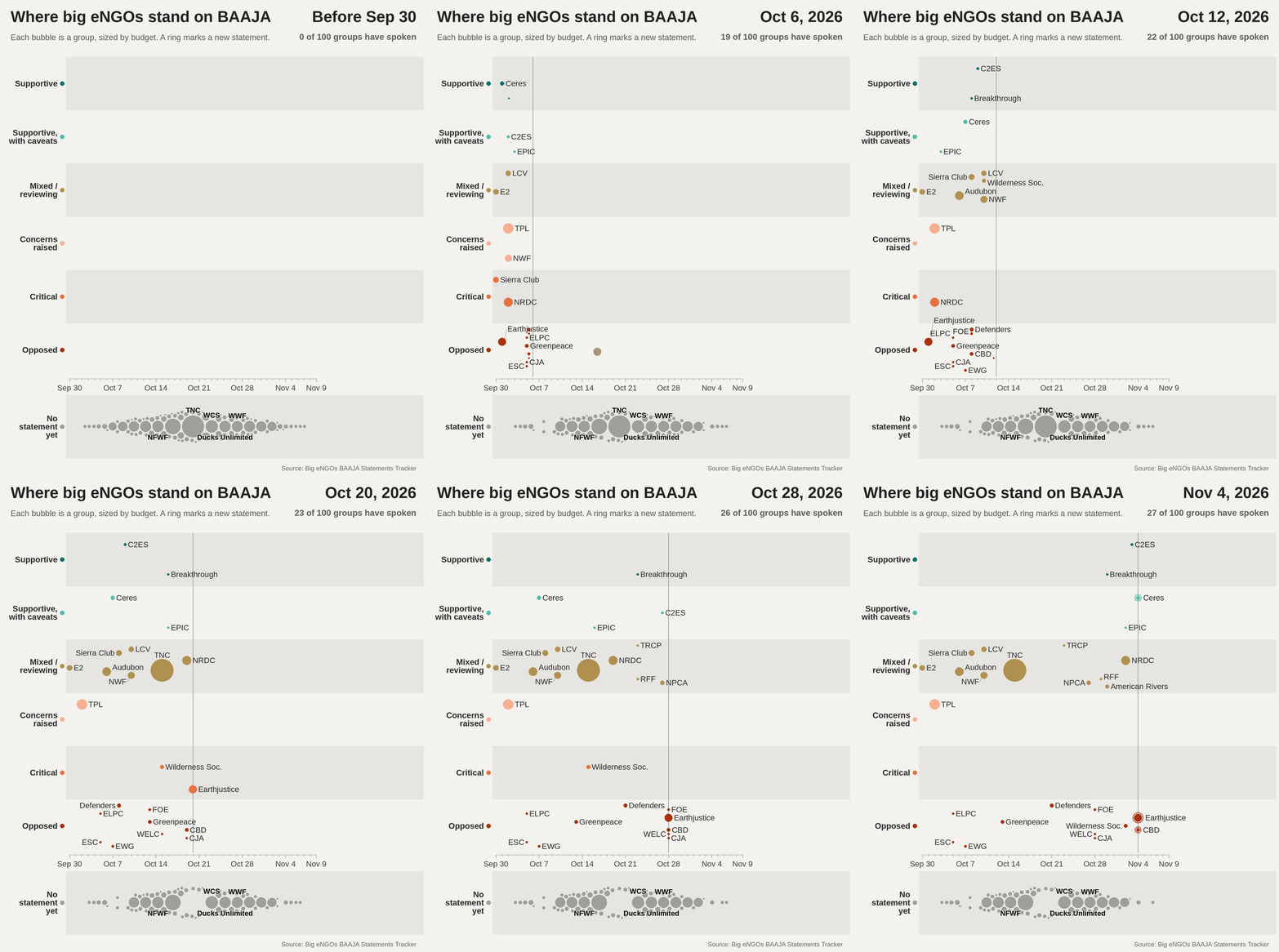
Sophie: Well I think ten years ago you would have had the entire environmental community and all the big environmental groups lined up clearly saying no, this is bad. This is dangerous and this is bad. I’m a dork, so I like to crunch numbers. And I looked at the 100 wealthiest environmental NGOs in the US and tracked their statements over time to map them as opposing, mixed and reviewing, or supporting BAAJA.
The overwhelming sound is silence. 73 of the hundred largest are saying nothing at all. There’s four groups in that largest group category who are out there actively saying yes and are making the case for BAAJA. And a lot of that support hinges on clean energy and grid improvements and climate benefits, which indirectly helps biodiversity as well. Some of them like EPIC, who you already mentioned, are also making the case, and PERC would make this same case that a lot of permitting was designed to limit pollution and destruction. But we apply it incorrectly to nature restoration projects and nature stewardship projects too, like wetland building and stream restoration and fuel mitigation treatments in forests to reduce wildfire risk, for example.
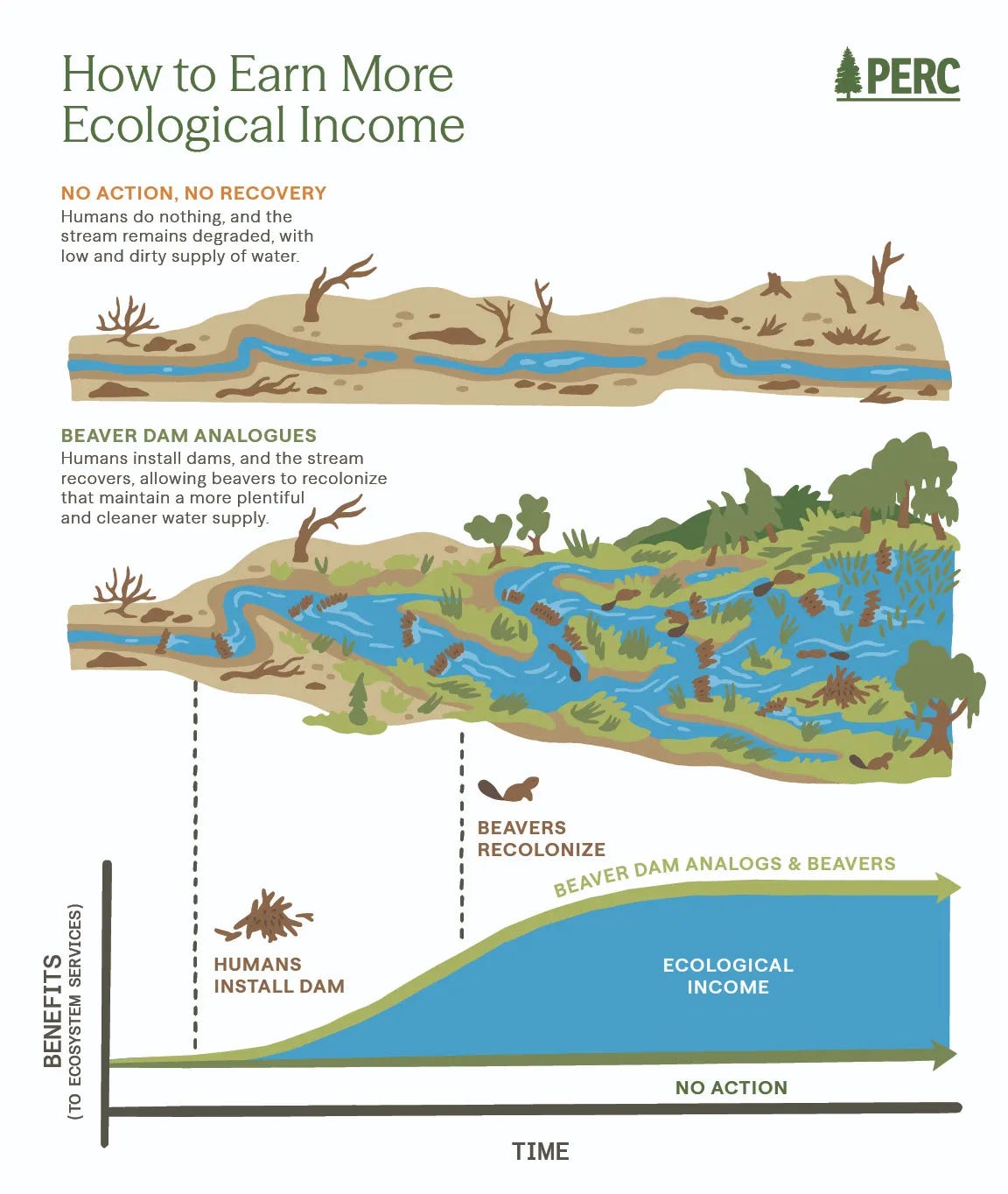
We are foregoing ecological income and racking up ecological debt by failing to restore and failing to steward. We end up with ecological poverty as a result. When you see permitting eating up to a third of a restoration project budget, that is unacceptable.
It tells you something’s wrong and could be fixed. There’s an artificial scarcity. So I think there are aspects of BAAJA that would in fact improve timelines for really important restoration and stewardship projects. My organization, PERC, has been a really big proponent of the Fix Our Forests Act, FOFA, which does some of the same things. It’s much more targeted towards forests, the wildfire crisis, et cetera. But there’s a lot of similar thinking and barrier removal in there. So I think for that same reason, there’s big parts of BAAJA we’re excited about.
The other thing to say here is that there are 12 groups in the ranking of the hundred largest groups that are resisting BAAJA. They sound really loud because almost every day they issue a statement saying how bad it is for X, Y, and Z reasons. And I do think these groups are very sincere in their beliefs, and I want to honor that, and they’re all different from each other too. They’re not a monolith. I did trajectories for each group to track their arguments over time, and I do not want to paint them all with this broad brush, but I think they’re probably in a pretty uncomfortable situation realizing that permitting reform has now become a wedge issue in the environmental community. It’s no longer unifying because of climate change, because of this mounting ecological debt and growing ecological poverty, because of our failure to restore and steward.
I’m an optimist. I think everyone’s gettable. I really do. I know that’s not literally true, some people won’t be, but when people sincerely want the best for the environment, I’m gonna work really hard to talk to you and hear you and persuade you with data.
Grant: It’s so helpful to first just make the argument and show people that this is not a bill that is trading transmission and renewables for environmentally destructive things. Many of the reforms that are in this, that would be in FOFA, things that become possible after some of this NEPA reform and fixing timelines really do benefit nature.
I view BAAJA as an environmental bill because the number of things we’re gonna be able to do for restoration, for forest management, for a number of these things that are currently bogged down. Forests are burning down before we can treat them because of some procedural hurdle from NEPA, and that’s not good for anybody.
Sophie: It’s not even just procedural hurdles, it’s also agencies protecting themselves from litigation risk. And BAAJA actually makes some really important changes there too. Litigation risk is not gone. If a project really violates the law, it can absolutely still be sued to stop it. But there are boundaries on that. There’s statutes of limitation, there’s who can have standing, you have to have filed a substantive comment during the comment period. There’s some really important guardrails there.
Let’s think about a real example, like the Pumice Project in the Klamath National Forest of California. They spent eight years preparing their Environmental Impact Statement (EIS) because they were so worried about litigation risk. In the end, they didn’t even need to do an EIS, they could do the more lightweight environmental analysis. And this multi-hundred page document was not even necessary, but they did it because they were so afraid of the lawsuits that they knew would come. And in fact, I would argue in many ways the impacts were positive because they were doing fuel thinning treatments in spotted owl habitat, for example.
But the litigation process, eight years of covering their butts by making this crazy document, was way longer than it probably needed to be. Years of documentation and the forest burned down in the interim. Forest fire is not necessarily a bad thing in fire prone ecosystems, as you know, Grant, as an ecologist. But when the fuels have been allowed to build up because we have not stewarded them, we have not thinned and burned them, they haven’t burned for a long time, we’ve suppressed fire, those forests burn in a really different way. These are really, really hyper-hot, severe, catastrophic fires. And now those owl nests are gone and they’re not going to be back there again for a while.
There is a real cost of delay in inaction and the environmental world is waking up to that. A lot of people already know that. Just saying no is not going to be an acceptable answer for ecosystem stewardship, but same for good housing projects, good renewable energy projects, good transmission projects. Those are all things that we should figure out how to say yes to.
Another great example is the Klamath Dams that came down, the biggest dam removals in US history, opening up thousands of river miles to salmon that were previously closed. Those projects took 20 years, even after everyone agreed they should come down, 20 years and over 300 permitting and planning documents.
And within days, within days Grant, there were salmon swimming past the rubble as soon as they got it down. It’s two years later now, and there are ten thousand juvenile salmon that have been born, we estimate. It blew the fisheries biologists away. There’s articles talking about how blindsided they were by how fast the recovery was. I would love to make that better and faster and easier. Where can we do that?
I recognize hydropower is controversial to think about ever getting rid of. But we have really, really aging infrastructure for a lot of these dams. There’s also a lot of dams that aren’t hydropower at all. They were there to power a textile mill in the northeast and are now blocking alewives from returning upstream. There’s just so many low-hanging fruit. It’s very frustrating but very exciting. I just want to pick the fruit. I just want to pick them!
Making restoration easier
Grant: That’s just it, when the fruit feels so low-hanging, that’s why you and I get so excited about this work. The changes from BAAJA could open up so much and so much innovation for these small land trusts that can’t afford a five to seven year permitting process. They can’t keep a landowner available, they can’t keep funding through this whole process. What we could open up for them to go do and really restore nature is so powerful. We’re ready to go. The shovels are ready. We just need permission to go do some of this stuff.
Sophie: You want to hear a really crazy idea? How could we take restoration further? You know the concept of development by right? It’s the idea that where as long as you meet local planning and zoning requirements you shouldn’t have to go through a lengthy public hearing process to build something on your property. There’s also right to farm laws, which for the rural context lets you do a set number of farming practices without somebody breathing down your neck. What about right to restore?
Grant: Yes, absolutely.
Sophie: Right. Follow restoration guidelines and plans and best practices, certify that you’re doing so, and if you’re in a place where you’re not gonna mess up your neighbor’s property because of a risk or downside outcome, you just go for it.
Grant: Absolutely. And to your point about the Klamath example, the salmon coming right back, I think it’s under appreciated how quickly nature bounces back. You have Aldo Leopold, who I revere, saying the fundamental first step of tinkering is to keep all the pieces and people get really worried about messing with nature as though we don’t understand what’s happening.3 But when we get out of the way, if we restore a little bit, nature really does bounce back fast in so many different cases.
We need to keep the mentality that nature isn’t lost forever. We really can go in, if you had restoration by right, do things to let nature do the work after you get rid of one dam, one thing that’s in the way. One irrigation ditch that’s too straight that an excavator over a couple days can make sinuous again. Suddenly the biodiversity pops back immediately because that water spreads out. It creates more room for species, it creates shade, it creates all these different things that suddenly the ecology just pops back into place. Not everywhere. And I don’t want to sell this as a panacea, but really that is the vision.
When you talk about cultural changes, giving people a vision of what could happen, if we pass BAAJA it really is an opportunity to go make some of these changes and take the first step towards making some of these visions a reality.
Sophie: I really do think it would just be a first step. There’s stuff in there that would make restoration easier, but we could go so much further. Exemptions, categorical exclusions, restoration by right. There’s so much that we could do to make it much cheaper and faster to restore nature.
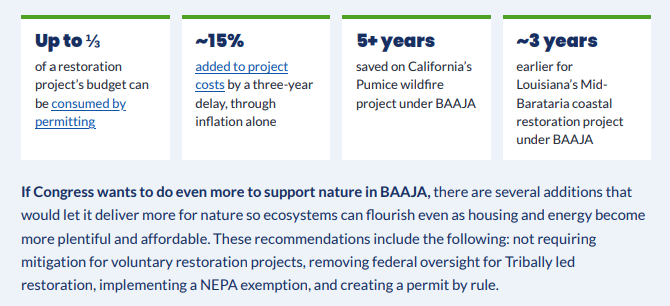
If you did that and started to actually bend that restoration curve it would also help get all of us out of that nature scarcity mindset—if we started to see recovery, it’s not so expensive. It’s not so slow. Yes, there are things that take a really long time to come back. And I don’t want to downplay the fact that restored habitats often take decades to pick up the last bits of biodiversity, those last rare and special species coming back. I don’t want to sound naive about that, but given how much land is degraded, we have to get so much better and faster at starting those wheels of recovery turning.
Grant: That’s the industrial policy of it almost.
Sophie: Industrial nature policy. Yeah, I love it.
Grant: You have to be able to do enough projects that you iterate, and you get better, and you have companies that are doing this all day, every day, and then can train a workforce. When you take five to seven years, it really does limit all of the supply chain that you need to be able to deliver on this as well.
Sophie: Well, and we’ve already built out that supply chain for wetlands. They’re a really shiny example. Not that it’s perfect, but they’ve gotten much better over time. There’s a whole private industry built around wetland restoration. That’s really because of the Clean Water Act and Section 404 of the Clean Water Act, which basically sets up a system where if you break it, you replace it.
If you wanna put a house on top of a wetland, you have to do compensatory mitigation, which just means you have to do enough restoration or repair elsewhere to make up for the damage you caused. The nice thing about that is that it isn’t just a license to pollute. It also puts a cost on harming nature. And developers are really smart. They’re really smart and they’re very good at spreadsheet math and will do avoidance. When you put a cost on it, they’re gonna try to avoid that cost, and so you’re gonna actually get active avoidance. Not through some kind of centralized planning top-down map to avoid this stuff necessarily. They can look at that map and be like, if I go over here and put stuff on this wetland, I know it’s gonna be really expensive and I know how expensive. So I’m gonna go somewhere else. And so you get to see some very positive self-reinforcing cycles there. We already have a whole wetland mitigation industry with wetland mitigation banks and bankers who are like a weird hybrid of real estate bro plus ecologist. It’s not enough, but for me it’s a real signpost to some of the ways this could work if we really wanted to regrow nature.
Grant: Yeah, absolutely. And I think your point is well taken that BAAJA doesn’t do that all on its own. Compensatory mitigation and many of these other pieces that you would want to see require more changes to other laws, but it is the first domino. Because as long as NEPA and some of these procedural hurdles in the Endangered Species Act timelines, unless you can shrink those and make them a little bit more manageable, you don’t get to the benefits of FOFA and some of these other projects in the same way.
I want to go back to something that you said, this notion of a real wedge issue in the environmental community. Back in April I wrote an essay titled Environmentalists aren’t anti-abundance. I looked at where conservation dollars are going. Part of the reason that the Sierra Club owns such a mind share, or the Center for Biological Diversity gets written about so much relative to the orders of magnitude bigger groups is that it takes way less money to hire lawyers to stop a project than it does to go buy land or map the United States to find where you should site renewable energy so it has the least environmental impact. These bigger groups are really pushing for this permitting reform. And even if they’re silent on this bill, their work, if you go to their websites, is advocating for permitting reform. They’re working with utilities on siting.
Sophie: It is. Like NRDC is one of those mixed in the middle. They’re not opposing the bill actively.4 They have reservations, they don’t think it’s perfect, but they have not come out and said no. They have a whole chunk of their website that’s all about permitting reform and the clean energy build out.
Grant: Exactly.
Sophie: They also have a litigation shop. So some of these places are pretty internally complicated and getting more so. This tension is really pulling taut here.
Grant: It’s tension within the groups, which I think is really interesting, within an NRDC or within some of these organizations, and then like you said, the environmental community at large. It’s a good reminder for us to not fall prey to the easy narrative that environmentalists are all against this. Because that’s just not really true. We’re not seeing it.
Sophie: Yeah, it’s not monolithic at all. A lot of people are asking themselves these hard questions right now.
One of the things I really want to see, whatever happens with BAAJA is this will not be the last time, even if it passes, this will not be the last time we need to reform the system in ways that are faster, better, fairer for people in nature. We’ve got a long road ahead and I’m excited for it.
And I really wanna see people who care about nature, the environmentalist, the conservationist, the ecologist, really get involved to start outlining positive solutions. Positive policies that they can come to the table with that are realistic, that don’t say no to every housing and every energy project, or even to most of them, but that do put nature into the system, into the economy, into our decision apparatus in a good way. Pricing nature repair and requiring it.
What are these proactive, well-designed policies that we would want that we’re excited for? Bring those to the table. There are wonderful creative, smart thinkers and policy folks in these places who are absolutely capable of it, and I’m sure already have ideas up their sleeves. And I would love to see that. I would love to see that come out to the fore and start to become a real nature plus people agenda.
Grant: I totally agree. And the last point I have on BAAJA here is that I would like to see some of these bigger environmental groups get off the fence. Acknowledging what they like or don’t like, arguing as anybody should in any bill, doing the horse trading that goes on to get as many of the good things as you can in there, but realizing like this is good for nature on net. This is the direction we need to go, this is part of the agenda. It’s only the first step, but we gotta do this.
I do worry a little bit that by sitting on the sidelines, some of these environmental groups are putting something very good for nature and the important first step at risk. We’ll see where it goes and we’ll see what they have to say. Some have committed to putting out statements before the bill goes to the floor. It’s going to be exciting to see how this goes. I’m certainly hoping that it’s a win for nature.
Sophie: Yeah, I have a lot of sympathy for the multiple competing pressures they’re under. Change moments are really hard.
Grant: It’s really hard. Changing like that is not an easy thing to do. That goes back to what I was saying about the innovators’ dilemma. They’ve got all of these programs and donors and people who’ve been built on a particular vision. It’s really hard to give up what made you successful for so long. They did have really important environmental wins that they’ve been a part of and spearheaded.

Why write?
Grant: Changing gears a little bit, one of the things that I wanted to talk to you about is your prolific writing. I am so impressed at the quality and pace with which you put ideas out. You were authoring papers as a professor. Now you write papers for PERC. You just had an op-ed in the Washington Post about the roadless rule. And your Substack, that you only started in January, you were averaging a post or two a month at first. Now you’re on a weekly or more basis!
Is this an evolution to more writing? Is this something that you’ve always done but now you’re just doing in a new format? What has this pivot to blogging and writing more done for you and what was the impetus?
Sophie: I think the secret reality is most academic researchers are at least partly writers. Writing is a huge part of that job. It’s pretty frustrating writing though in that you’ll come up with a great idea, you’ll write a grant that’s often 15-plus pages to get it funded, you’ll hopefully get the money, you’ll do the research, get the data, analyze it, write it up, submit it to a journal, wait six months, get some feedback, resubmit it, wait six months, and maybe they will accept it finally. Wait more, many more weeks, often months, it finally gets published.
By the time it gets published, you’re so bored of that idea. That was my idea five years ago. You finally start to get some feedback on it from the public and your colleagues, and you’re like, Yeah, yeah, that’s so last decade. I’m on to some other idea, and it’s very worth doing. I don’t want to undermine support for the scientific enterprise, but it’s a really slow ideas-to sharing-to feedback loop.
One of the things that drew me to the white paper style writing for my job at PERC and then this even faster iterative loop of blogging at Substack is that it feels like it’s a pace of writing, idea to feedback, idea to feedback, that meets the pace of change and the need for change of the moment. You can see something happening, respond to it, try to shape it, try to get your idea out there into the mix, into the conversation in that more dynamic way that doesn’t take months and years. It feels like we really need ideas right now. So I find it very galvanizing.
I also have access to really wonderful editing help, as you know, the Roots of Progress Institute, where we are both writing fellows, are just so generous with their time and resources and have like world class editorial staff who make everything better.
Grant: Yes! Shout out to Mike Riggs and Michael Larabee and others who are helping us with all of this for sure.
Sophie: Yeah, exactly. So I use the heck out of those things, and I really get a lot of energy back. I guess I’m a writing extrovert. I get a lot of joy and energy from writing something and getting people to respond to it, whether it’s my editor or the public, and starting to understand, does this idea have legs, what are its problems, what are its advantages, how can it move forward? Okay, I need to change it like this for the next piece.
Given that a lot of what you and I are doing and talking about here is a kind of culture and movement building, that just feels really important right now. It’s a way to quickly grow and shape and disseminate ideas and get responses to them. So it’s been great. It’s been really fun.
Grant: I love the way you frame that. I haven’t heard it talked about in quite that way, I think sometimes it feels like everyone has a Substack, they’re doing hot takes, or they’re just reviewing something else. But in a space like conservation abundance, you’re building it. We’re building this group, this group of people is building it. You need this level of constant communication and shaping.
And it’s turning into real projects. You introduced me to some people at the Conservation Abundance Workshop that turned into actual jobs for me, where we’re working on implementing a solution that we came up with or something that we batted around there.
The writing is not this navel gazy thing. The writing really is shaping an active idea, deciding what comes next, and what action we take to deliver on something. As opposed to just a newsletter published once a week just because I want to get out there. There’s a real energy and urgency to it beyond the writing.
Sophie: Yeah, and for me the writing is a tool. It’s a tool to achieve these goals of cultural change and cross pollination and conversation between the we want more nature world and we want more human habitat world—the “habitat for all” bridge. It’s really a very focused tool in that regard. Who knows? Wouldn’t it be great if everyone knows the book Silent Spring, if at some point we take all these ideas and cook them into Symphonic Summer, the book on the next era of conservation and the environment. Writing is powerful. Writing is very powerful.
Grant: You’re totally right. At the Roots of Progress we just published an anthology of the best essays of the year, Of Smallpox and Sewing Needles.5
Sophie: You were an editor on this, weren’t you? That’s awesome. I have the other one.
Grant: Yes, and you’re featured in last year’s. Every year doing these, you really get a sense of what’s shaping the world, the ideas and what people are writing about. There are essays that turn into books or full-fledged ideas too. You mentioned Ezra and Derek’s book, Abundance. They were working on these things and then put it in book form and it exploded. Who could have possibly expected that it has this influence.
Sophie: I think we just saw an abundance wave election, Grant. A lot of the people who got elected on Tuesday were running on affordability and getting rid of our artificial scarcities and changing the system.
Grant: I think you’re totally right. And you see the power of that. And I’m curious, one last question on that. I have found it an incredible discovery tool. I think of it as a bat signal for finding my people. Like I found you.
Sophie: Love that.
Grant: If I look at who’s at the top of my text threads every day, it’s you and me sending articles back and forth. We only found each other a year ago, literally because I wrote about an experience I had and it got picked up and sent to you. Are you finding the same thing? What’s your mental model of this as a way of finding your weaver birds, if you will?
Sophie: Oh, which animal analogy to choose, Grant? It’s so hard. We could go with the bats and like echolocation, sending the waves out, seeing what comes back. That’s the real bat signal, right? Bat signal is not a light. It’s not a light up there. Bats are not visual. Well, some of them are. Fruit bats are visual, but most bats are not visual. Actual bat signals getting sent out by writing.
Grant: I love you bringing the biology to the bat signal. That is delightful.
Sophie: Or you heard me get nerdy about weaver birds which are these cool social birds that basically only want to hang out with other weaver birds. They build bird apartments woven out of grass together and they’re multi-generational efforts. They’re bird cities in these giant acacia trees and other trees in Africa. There’s multiple species, but the social weavers are the most spectacular because rather than hanging little single-family homes on branches, which some of them do, with all single family lots, sociable weavers build literally on top of each other’s houses. They are building giant apartment complexes for birds.
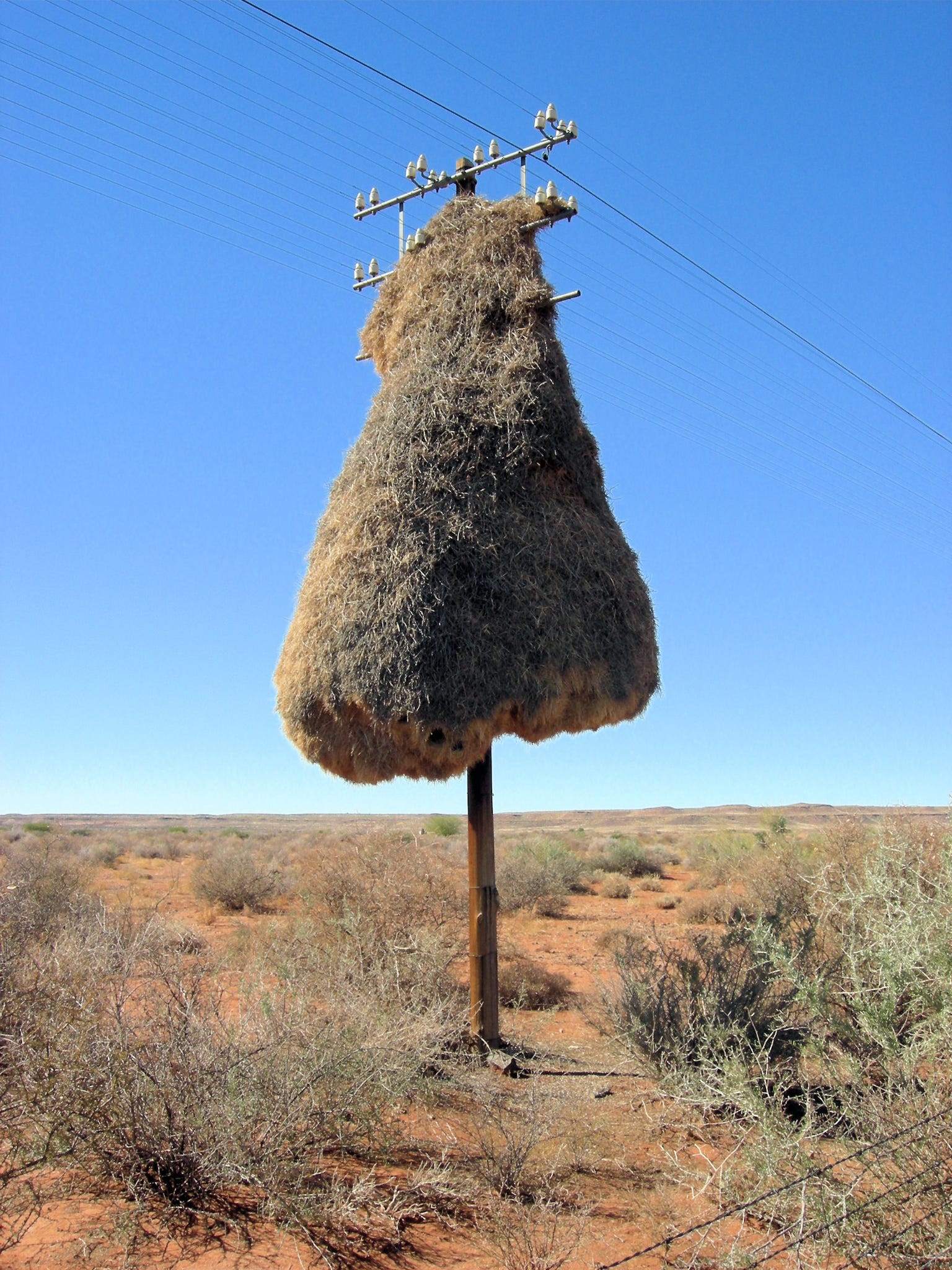
Grant: Talk about density!
Sophie: Yeah. They’re just fantastic. So what crazy big wild generational project are we weaving together?
Grant: I wanna get Jeff Fong and Andrew Burleson studying weaver birds; the new architecture of progress is weaver bird style cities.
Your writing really has been an inspiration for me. The productivity and the purpose behind it, it’s just been great to read. For anybody who’s made it to this part of the transcript or the podcast, please click on some of the blue links that are in here because Sophie’s writing is great.
Moss balls: A love story
Grant: And speaking of, one of my favorite essays is your essay about moss balls. What is a moss ball, and why are they the cutest plants around?
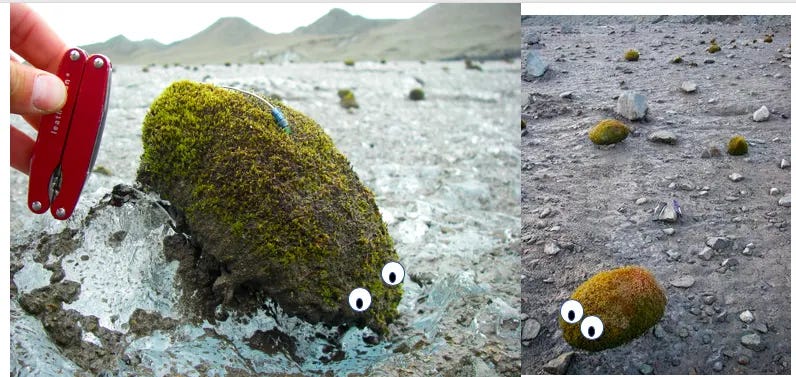
Sophie: Moss balls look like little green fuzzy potatoes. And they are extremely mysterious. We don’t really know how they form. They basically form out on the flat bottom parts of glaciers. This is where you start to get ice melting and sediment melting out of the ice and clumping. You’ll see them in what look a lot like herds. There’ll be a whole zone where there’s a lot of moss balls and other zones where there’s none. They’ve been noticed by many people over time. They’re also called jökla-mýs, which means glacier mice. They’re just absolutely charming plant clumps.
Grant: They remind me of Chia pets. Back in the day, Chia pets would be advertised on all the late night shows.
Sophie: Yes, exactly. Yeah, but they’re autonomous chia pets. You do not have to feed them. My husband and I, this is before we were married, we were up in Alaska together where we met and we got really curious about them. How long do they last? We cut a couple open, which actually made me cringe, even though you’re not actually hurting anything. You didn’t hurt the moss, it’s just two pieces of moss now. But you cut them open, hold your breath, cut them open, and inside there’s a ring of moss and then a clump of dirt, maybe with some rocks in the middle. And you can see these rings of dirt where you could see these moss balls were probably getting bigger over time, actually.
So that made us really curious. These are not a one-season thing. How long do they live? And so, like the huge dork I am, I put my wildlife biologist hat on, and I’m like, we’re gonna tag them. We’re gonna tag the moss balls, just like you band birds. Just like you put an ear tag in certain wildlife species to track them over time. And we’re going to use capture-mark-recapture, which is a statistical technique for going out to a place, trying your hardest to find your marked creatures, in this case, moss balls, and then the rate at which you re-find them versus don’t re-find them can help you understand what their likely survival over time is and how long they live.
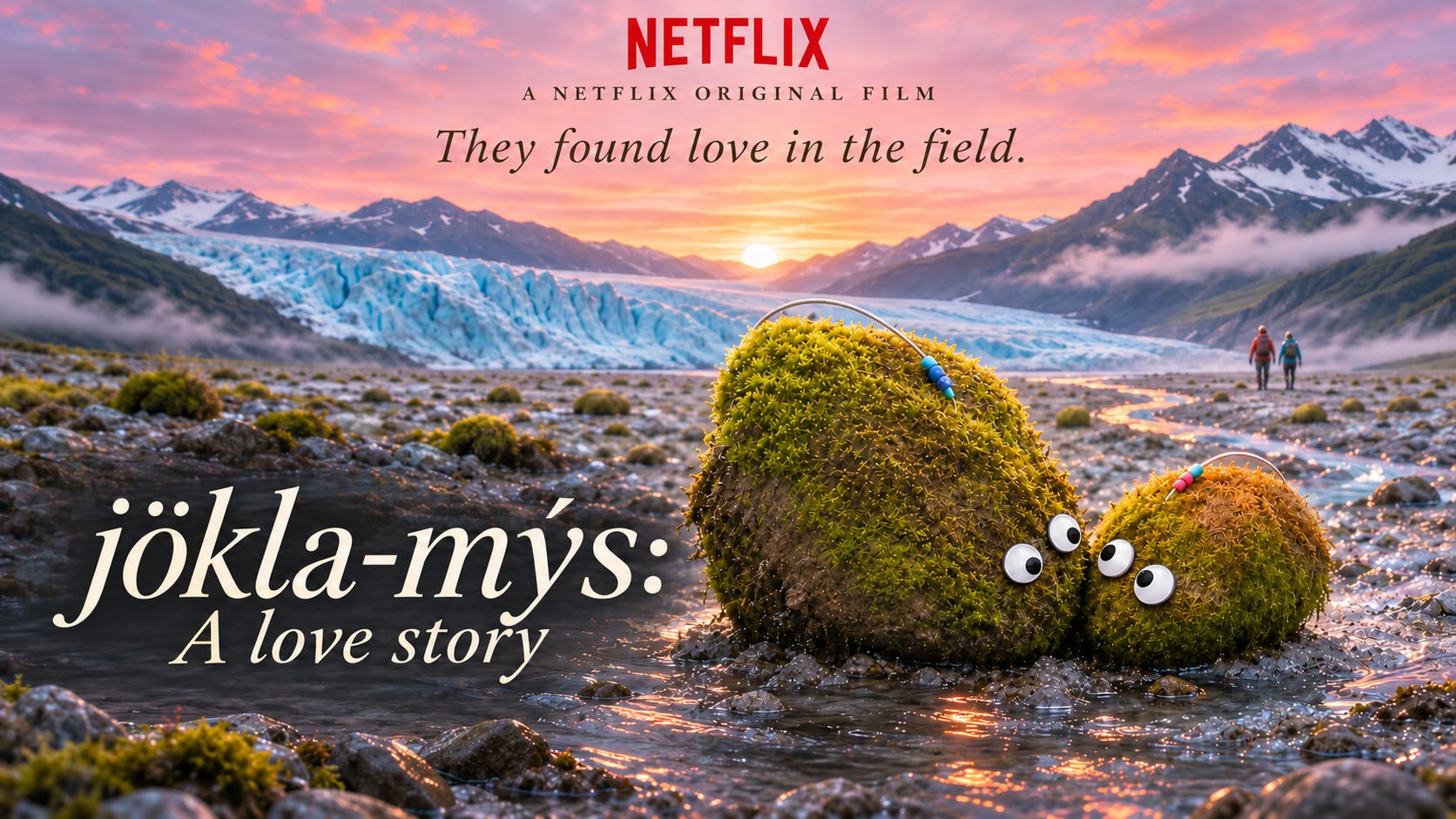
And so we did it. Such a classic wildlife biologist thing to do. So we tagged them with little colored beads, and we followed them around on their journeys. We wanted to understand their movements. Why do they seem to be moving around? How are they moving? Why are they moving? It was just an absolute blast to do. It was very early in our romance, so this is a very formative experience for us. Moss balls, a love story.
Grant: I can’t wait for the movie!
Sophie: It’s gonna be huge on Netflix, Grant.
It was so much fun and it turns out we actually still don’t know why they move. It’s not the angle of the sun. It’s not wind. It’s not water. We ruled out all these hypotheses, and every time we talk about it or or publish something about it people pop up to try to explain to us what it is. We’re like, no, no, no, we tested for that. I promise. So we still don’t really know why they roll around, but they roll synchronously. We know it’s something geophysical. That it’s probably something to do with the sun, but it’s none of the obvious things. We measure, you know, the angle of the sun, azimuth, snow melt, just we did it all. The average life expectancy for a moss ball is six years, according to our math. So these things are hanging out. There’s probably still some hanging out on that same spot with their little tags in, who knows how long they live. So we have a wonderful world very worth exploring.
Grant: That is the thing that has been one of the biggest connections between progress and wildlife biology for me. Wildlife biology does teach you to ask, what is happening here? What am I seeing that these things are moving in this way? What’s this human habitat in Lighthaven? And you start to look at the connections and the structure.
Progress is somewhat similar to that. You start looking well, why did it get this way? Why are we organized in this capacity? Why does the population do this thing? You can apply that to so many things. There really is an infinite curiosity you can bring to the world.
Sophie: Well, we are the problem-solving animal, but I think we are also the storytelling and meaning-making animal.
Favorite species
Grant: Aside from moss balls, what was your favorite species to work with as a wildlife biologist?
Sophie: You already clued me in that you were gonna ask me this question. And it’s the hardest. I feel extremely torn and tortured by this. I did my PhD on deer fawns, so just absolutely incredibly adorable creatures. But I’m gonna have to go for Alaskan pikas. And for people who don’t know pikas, go Google them immediately. They’re who Pikachu’s based on.6 They’re a fluffy, tiny short eared rabbit that lives in rocks.
Grant: With an adorable little screech.
Sophie: I’ll do the noise for you. They go, Eee!
That’s if you hear that while you’re hiking. Just stay still and look around. They’re in Colorado, they’re all over the place. And one of the best things about them is that they eat flowers. That’s their food. They eat wildflowers out of alpine meadows. The other thing is they’re absolutely OCD because they’re too small to hibernate. And so they have to do 10,000 trips a summer from the meadow to their rock, to the meadow to the rock, and they lay out the meadow flowers and let them dry, and they make a hay pile that accumulates over the whole summer, and that’s what they eat all winter under their rock.
So they’re very obsessive. Like dusk to dawn and even through the night, they are foraging for hay. They’re so into wildflowers that even though they know they shouldn’t, they will go into a trap for wildflowers. Like they know it. You can see them having regrets even as they’re doing it. But they cannot help themselves. And so you actually trap them with wildflowers as bait, and they’re just a delight.
Grant: Some of the best hikes I’ve ever been on are when you get up to that alpine area in the talus and you see them running around. It’s some of the best wildlife viewing you can do because they’re so conspicuous. Like you said, they have to make all these trips. They don’t have time to stop just because you’re there. Most wildlife wants to hide out, but the pikas are just like you said, they’re doing their thing. They’ve got a one-track mind and they’re just the cutest.

Sophie: They’re a delight. They’re an absolute delight. What’s your favorite, Grant?
Grant: Like you said, this is an impossible question for me because it’s like, well, on what dimension are we doing this? Who has the cutest babies that I cared for at the Phoenix Zoo? What settled on is what are the coolest field experiences that I had? One was a narrow-headed garter snake, which is this little snake that lives in Sedona along Oak Creek in Arizona. Some of the most gorgeous country ever. They hunt in the water for fish, so to do a survey for narrow-headed garter snakes means you get in Oak Creek in the middle of the summer and just walk through Oak Creek, through some of the most gorgeous canyons and country that there is, and look for snakes and catch them out of the water. They’re small, they don’t bite, they’re not venomous or anything. And you’re catching snakes out of the water while you walk around in this gorgeous country.
Sophie: I don’t think catching snakes out of the water is most people’s dream, but I really get it. That sounds amazing.
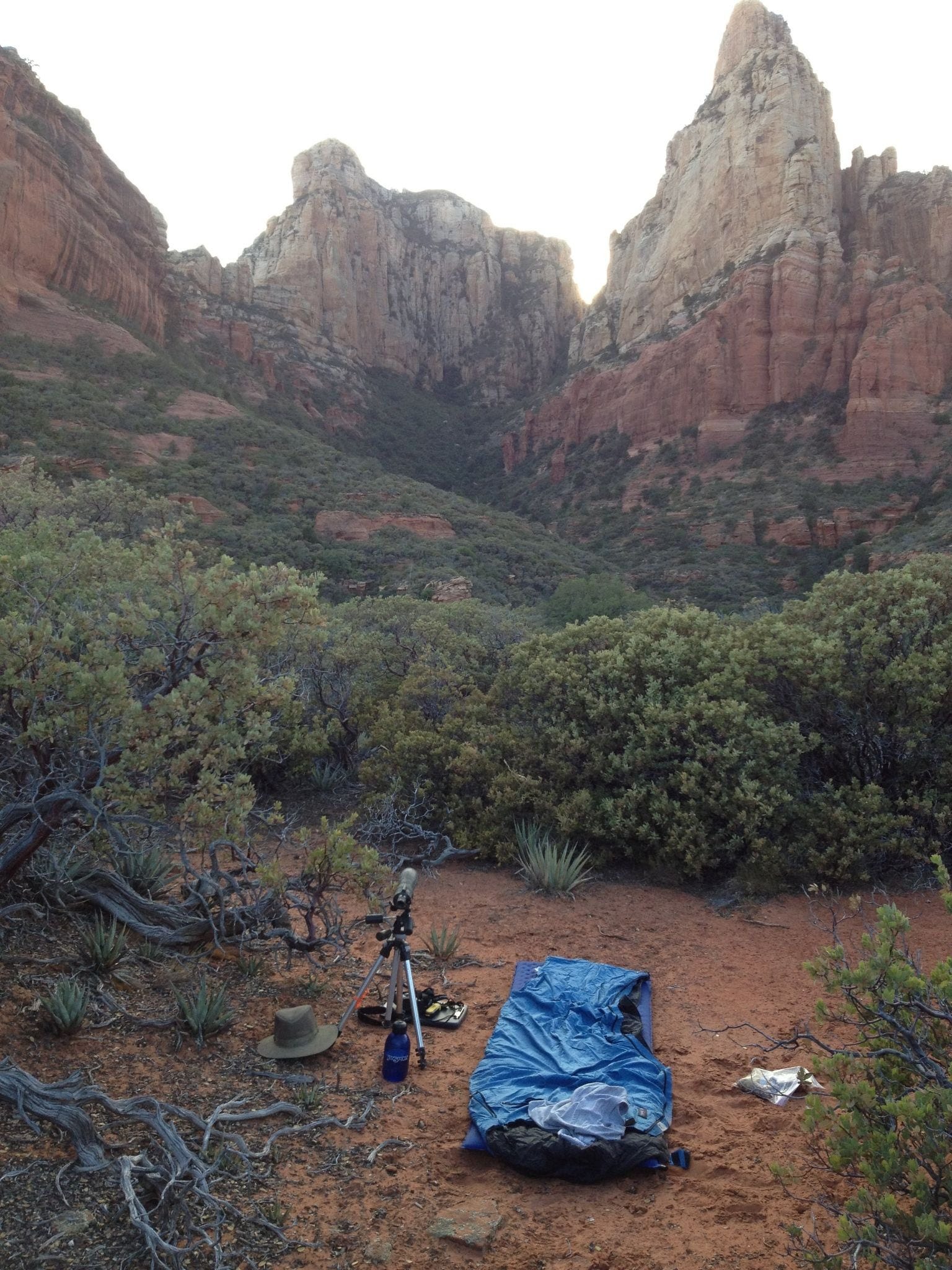
Grant: Exactly. As a wildlife biologist, you get it. And then the other one also in Sedona is the peregrine falcons. Sedona has these amazing buttes. You’d have to watch for falcons in the morning and the evening along these buttes. So late afternoon, I’d go on this beautiful walk through Sedona, and start bushwhacking, and I would climb to the top of those buttes. I would set up a sleeping bag and a scope on the very top of the butte. Helicopters would fly over, doing tours, and would probably wonder who is that guy up on top of this thing?
I would sleep up on top with my scope set to the cliff walls, looking to see if there were any falcons that night, and wake up in the morning, the sun’s coming up, first light, let’s get the scope out and set up on top of the mountain. Those are two for me with extremely fond of memories.
Sophie: So you like animals who like good habitat.
Grant: I like animals who like good habitat, I like animals who take me to cool places. Desert tortoises, loved working on them, but fifteen mile hikes in the middle of the summer and a 115 degrees plus, you’re pulling teddy bear cholla spines out of your calf all afternoon.
Sophie: I too have done a desert tortoise survey through the Mojave for a transmission line actually. It’s a slog. Just keep walking. Just keep walking.
Grant: It’s a slog. They’re cool animals, their biology is amazing, way cooler than a snake or a falcon, frankly. They’re like these little tanks, but I didn’t always enjoy being out there looking for them.
Where have we made progress that’s taken for granted?
So this has been a great and far-ranging conversation. I want to ask you one last question. What is your favorite example of how far we’ve come, related to your field of study. Where have we made progress that’s taken for granted?
Sophie: I’m going to lean into restoration. I think I’m really excited about what we call process-based restoration, which it’s a broad idea, but it’s most keenly applied in stream and river and wetland settings. The idea is that if you can restore a natural process, like the way a stream naturally moves and deposits sediment and a wetland slows down water and sinks pollutants because a beaver’s built a dam there. If you can restore a process, then it becomes a self-sustaining thing that provides habitat for all these other animals and also all these benefits downstream to people. We’ve come so far in process-based restoration. Now we just need to make it faster and easier. But we understand how now. We have it super dialed and so many great examples of how to do it right. I think that includes bringing down dams to let rivers run freely again, all of these things. Unleashing nature to be itself again and be self-sustaining.
Grant: That is such a good one because I was with a team in Montana that does stream restoration, and we stood on a bridge over an irrigation ditch. On the left side as you looked was still classic irrigation ditch, straight and shallow. There’s no birds, there’s no insects, there’s no fish that you can see on that side. And then you’d look over the other side of the bridge, which they had made sinuous again. Now the water’s spreading out and there’s shady spots and you could hear the nature. The buzzing of the insects and the birds chirping. There are ducks on the water, and you’d see trout hanging out. My gosh, all it took was getting rid of the straight and making it curvy again, and nature jumps right back.
Sophie: It’s just the best to see that stuff. It’s like HGTV home improvement before and after, you know.
Grant: Well, Sophie, this is a real pleasure. I just love talking to you. This was a great excuse for me to get to read your essays again and have a reason to talk to you for an hour. Thank you so much for the time. The first clip I’ll make is of you making the pika a sound and get that circulated on the internet as many places as we can.
Sophie: That’s going to be my fifteen seconds of fame. Can’t wait.
We’re trying to add environmental detail to the half-drawn abundance horse, Matthew Yglesias!
As of recording on Nov. 5, 2026
Actual quote from his essay, Round River: “The last word in ignorance is the man who says of an animal or plant, "What good is it?" If the land mechanism as a whole is good, then every part is good, whether we understand it or not. If the biota, in the course of aeons, has built something we like but do not understand, then who but a fool would discard seemingly useless parts? To keep every cog and wheel is the first precaution of intelligent tinkering.”
NRDC did come out against the bill after we recorded
The book will go on sale shortly, stay tuned!
There’s some debate on this, maybe based on a squirrel?


