

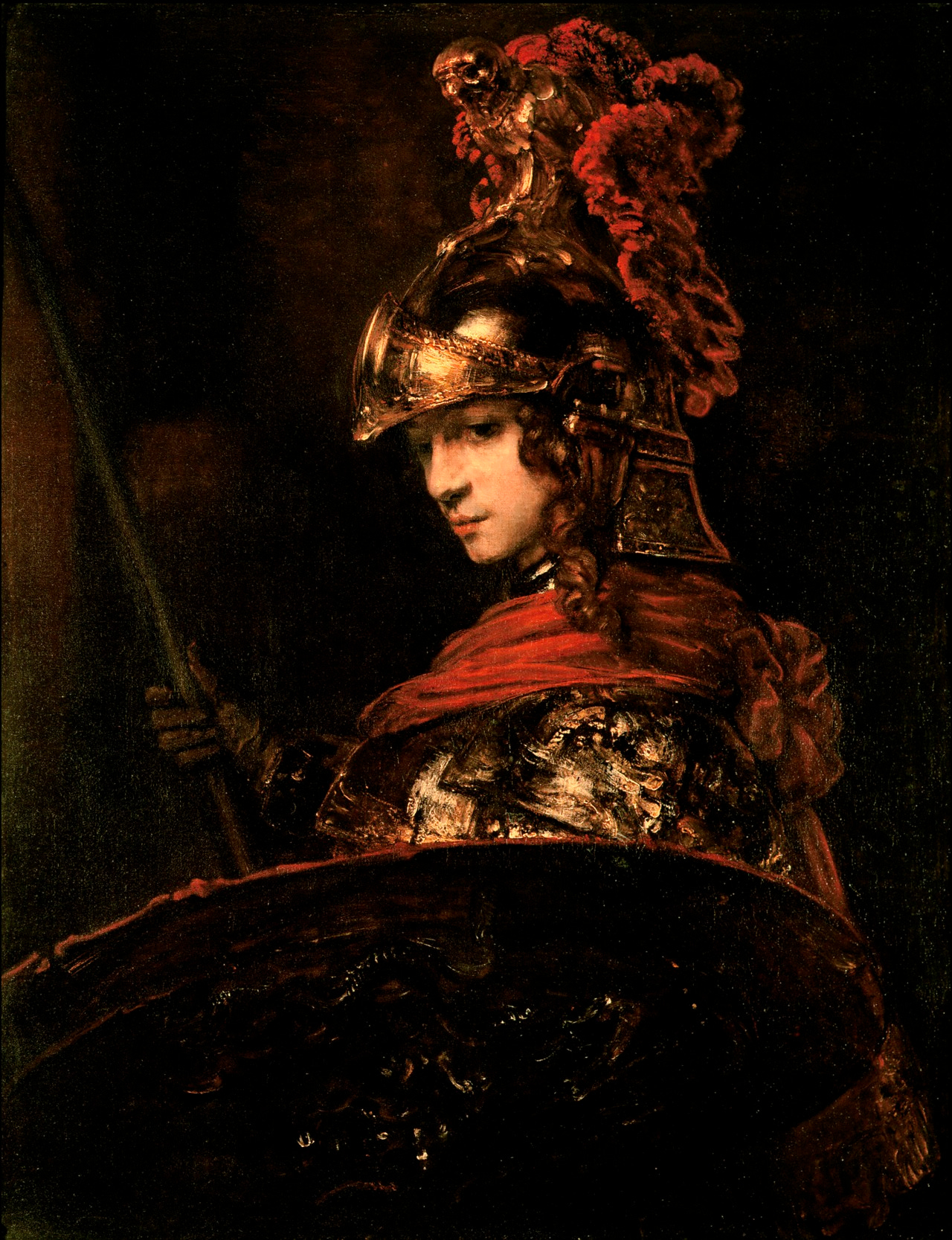
Editor’s note: This evening we return to our Interintellect salon series on The Odyssey. This session will cover Books 1-4 (only 75 pages). A few seats are still available, and you’re warmly invited.
I didn’t plan this follow-up to my earlier essay, “Don’t die without reading The Odyssey,” but I’m having too much fun with The Odyssey not to keep writing about it. Here are a few ideas and reflections that came to mind as I reread The Telemachy, Books 1-4 of The Odyssey.
Mythology as delight
In Book 1, a line jumped out at me:
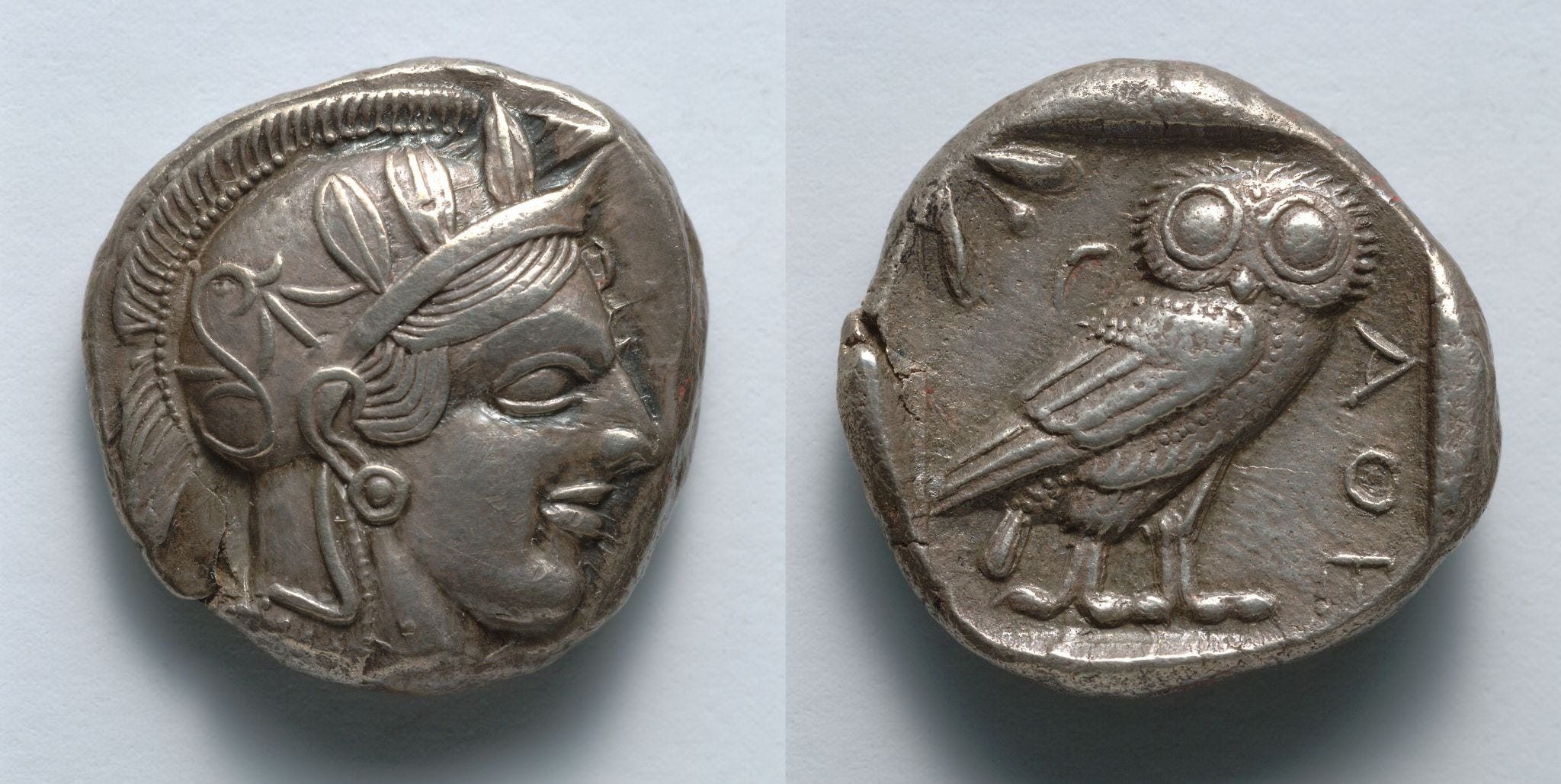
“With that, the owl-eyed goddess
flew away like a bird, up through the smoke.”1
I didn’t get the reference. Why is Athena called owl-eyed? With a little help from ChatGPT, my constant reading companion, I learned that Athena was symbolized by an owl and an owl’s presence is a sign of her blessing. That ancient association is one of the main reasons owls are still symbols of wisdom today. I had no idea.
Only a few weeks ago, I woke up to two great horned owls duetting (a kind of mating dance) outside my window. It was a delightful experience in its own right, but now when I see those owls in the neighborhood I have the added joy of laughing to myself that the gods must be wishing me a blessed day. The more I learn about Greek mythology, and the more I connect it to the world around me, the more delightful the world seems to become.
This extends to common language. Greek roots and mythology permeate English. There are too many examples to count, but let’s start with the obvious. Our word for a long, arduous journey — odyssey — is the title of the book. Doesn’t it make a road trip in a Honda Odyssey, packed with young kids, far funnier and more pleasant when you can compare your own plight to that of Odysseus? I too have traveled in the presence of what felt like a screaming, multi-headed monster and collapsed in exhaustion at my destination. More whimsy like this in our culture, please.
Mentor(ship)
Mentor is another example of a word lifted straight from the pages of The Odyssey. He is an important character, especially in Books 1-4.
“When Odysseus sailed off,
this was the friend he asked to guard his house
and told the slaves to look to him as master.”2
This is not the real Mentor, ineffectually managing Odysseus’s home, from which we get our word “mentor.” It’s a reference to the wisdom of Athena. She disguises herself as Mentor to guide Telemachus, Odysseus’s son, when he sets sail for news of his father and counsels him along the way.
What struck me as I read passages of Athena mentoring Telemachus was the way she encourages and teaches him to trust his own judgment and abilities. This is the foundation of good mentorship, ancient or modern.
“But Mentor, how
can I approach and talk to him? I am
quite inexperienced at making speeches,
and as a young man, I feel awkward talking
to elders.
She looked straight into his eyes,
and answered, “You will work out what to do,
through your own wits and with divine assistance.
The gods have blessed you in your life so far.”3
The best mentors help their mentee through a “becoming.” What Telemachus wants to become is a grown man able to take matters into his own hands. Becoming can also mean something more subtle. A mentee could want to become a lover of art, become a better father, or simply become more knowledgeable in a given domain. What matters is a mentor able to encourage and direct and a mentee with judgment and the ability to act. So it is with Athena and Telemachus.
But mentorship need not require heroic commitment or divine intervention. Assistance towards becoming can be temporary, bounded by topic, and unconstrained by relative ages. We should all be looking for more ways to offer encouragement and direction for those seeking to become.
Xenia
Family lore says I’m a descendant of an Irishman who came to America during the potato famine. I don’t think of myself as an Irish-American; my heritage just doesn’t come up that often. There is one exception, and it’s not St. Patrick’s Day. It’s immigration.
I think about that ancestral grandfather and what it must have felt like to be an Irish immigrant in the mid-1800s. When he set sail in search of a better life, I wonder whether his wildest dreams could account for how good his distant grandson has it? With the xenophobia he faced, I doubt it.4 Today I can write under the byline Mulligan about The Odyssey and my name triggers thoughts of golf, not destitution. “We” Irish have come a long way.
I couldn’t get this anecdote, or thoughts about immigration more broadly, out of my head as I read The Odyssey. One of the dominant themes of the story is xenia. Xenia is a moral and sacred code governing norms of hospitality between hosts and strangers, and the first four books are one big moralizing lesson in how to uphold it properly.
Within the first few pages of Book 1, good and bad examples of xenia are laid out. Telemachus welcomes Mentes (Athena in disguise), feeds him, and honors him before he even learns his name. The suitors camped out in Odysseus’ absence show anti-xenia behavior. They overstay their welcome, destroy wealth, and show no gratitude. Throughout The Odyssey, good hosts uphold xenia and are rewarded for it. Monsters and villains who violate it court catastrophe. The poem’s moral universe revolves around xenia. Without it, society decays.
It got me thinking about how we treat the strangers who show up on our shores today. We educate and then force international students back home. We have random lotteries for H-1B visas instead of policies to keep high-skilled workers here permanently. Visa wait times and renewal processes are longer and more harrowing than some of Odysseus’s tribulations. If that’s how we play host to the most talented strangers, how likely is it we’re treating our more ragged guests well?
The xenia described in The Odyssey is not a great guide to immigration policy. Xenia is about how individual guests, not a diaspora, are treated. It covers brief encounters, a guest passing through, not settlement. Yet I think xenia still has something to teach us. The formal protocols of xenia are oddly comforting. More than that, the rules of xenia are coherent. There is morality in clear rules of the road.
Join us!
Find all the information you need to sign up and follow along with the series here. Can’t make it this time? Join us on Thursday, February 12 for Books 5-8.
I hope to see you there! If you enjoyed this essay, here are links to more of my thoughts on The Odyssey so far.
Session 1, Introduction: Don’t die without reading The Odyssey
Interintellect Hostcast podcast with João Mateus (summary on X)
X thread on fun little details I’m learning, updated as I reread The Odyssey
Book 1: Lines 319-320 from Emily Wilson’s translation
Book 2, lines 225-227
Book 3, lines 21-28 (emphasis added)
More Greek in our everyday vocabulary!