

My Writing
I had a great conversation on the Interintellect Hostcast with João Mateus (summary on X). We talked about progress, abundance, and The Odyssey.
Reflections on the Telemachy, Books 1-4 of The Odyssey. The second in a series (Part 1) related to my Interintellect salon series on The Odyssey.
It got me thinking about how we treat the strangers who show up on our shores today. We educate and then force international students back home. We have random lotteries for H-1B visas instead of policies to keep high-skilled workers here permanently. Visa wait times and renewal processes are longer and more harrowing than some of Odysseus’s tribulations. If that’s how we play host to the most talented strangers, how likely is it we’re treating our more ragged guests well?
The xenia described in The Odyssey is not a great guide to immigration policy. Xenia is about how individual guests, not a diaspora, are treated. It covers brief encounters, a guest passing through, not settlement. Yet I think xenia still has something to teach us. The formal protocols of xenia are oddly comforting. More than that, the rules of xenia are coherent. There is morality in clear rules of the road.
A few seats are still available for the next session on February 12, and you’re warmly invited. We’re having a blast!
Ideas I enjoyed
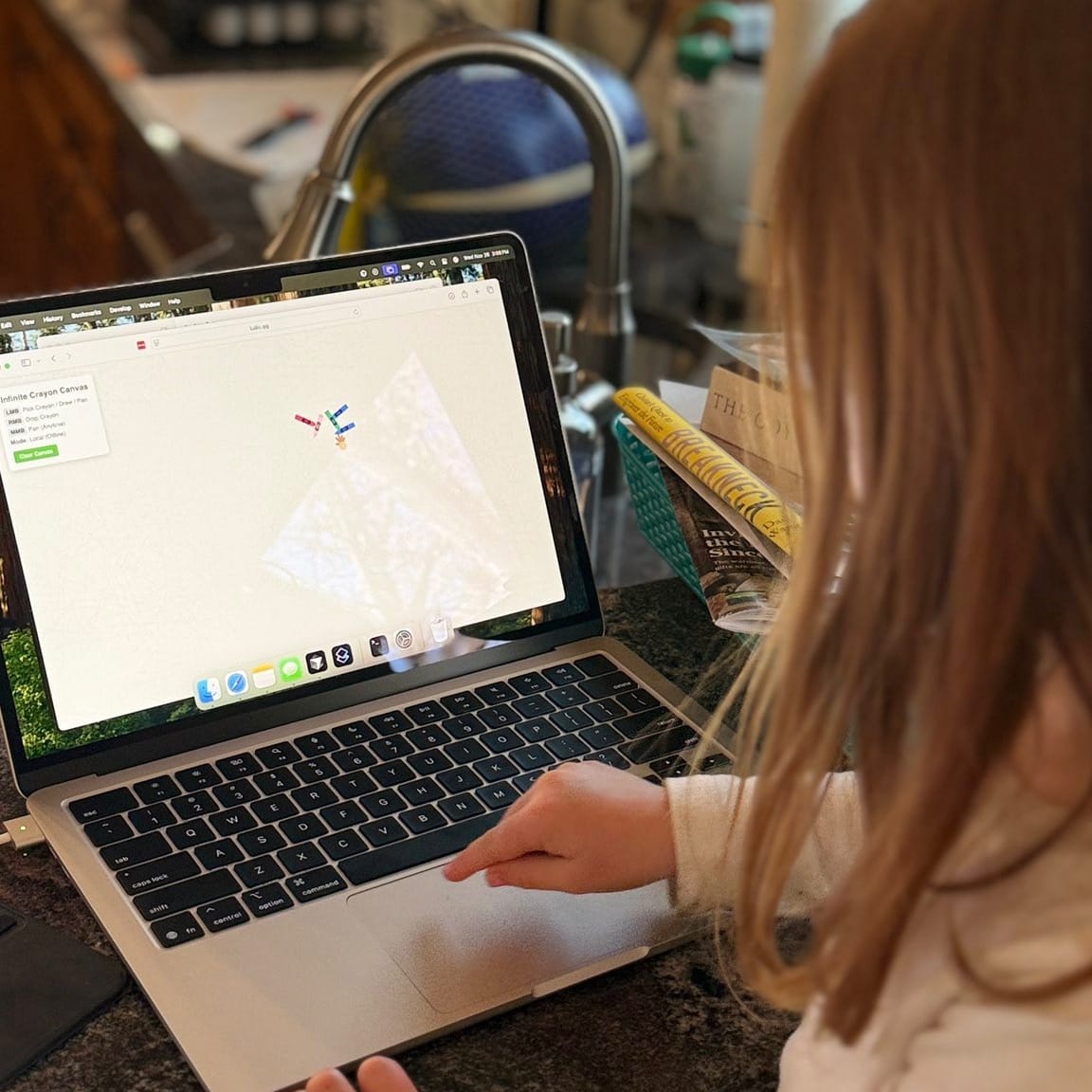
Magical AI Crayons by Brendan Mulligan, on AI and creativity. I’m biased because he’s my brother, and I helped edit the piece, but Jason Crawford (X) and Rohit Krishnan (X) enjoyed it too!
“Leonardo da Vinci had to be a master chemist to break free from the limited pigments available from natural materials. Now, every child has access to over 100 colors in a box that costs their parents less than a sandwich. Professional artists may scoff at the lowly crayon, but is there a more common art tool in the American home? Every household with a child likely owns more pieces of colorful art than a workshop could produce throughout the entire Renaissance. Their beauty lies not merely in their variety but in their simplicity – hand a box to a toddler and without instruction they will put them to use immediately.”
The Case for Conservation Abundance by Sophie Gilbert. Many environmentalists see the necessity of an abundance agenda. We need to push back against the narrative that environmentalists are nothing but obstructionist.
“The question facing our country and the world more broadly is not whether a massive amount of energy infrastructure and housing will be built, but where, how and when. And those are questions that conservationists can and should help answer. If conservation values and research can be included in siting, designing, and building more of what people need, then both nature and people will win.”
Economic development is key to addressing climate change by Matt Burgess, Patrick T Brown, Matthew E. Kahn, and Roger Pielke Jr. The conclusion seems self-evident, but common climate policy arguments suggests it isn’t. It’s a paradox because one of the arguments I’ve heard most from climate hawks is that we should do something to help the poor countries that can’t adapt as they’ll be disproportionately affected. That argument acknowledges wealth and economic development are beneficial for adaptation, yet policies are proposed to make people poorer. This paper helps illuminate the folly.
How Will the Miracle Happen Today? by Kevin Kelly. I’ve said many times that it feels like the universe wants to help me, so I love Kevin Kelly’s use of the word “pronoia.” What a great explanation of the idea to go along with an important condition: one must be open to the gift.
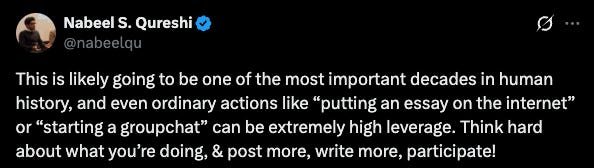
From Nabeel S. Qureshi:
Exciting new projects:
Virginia Postrel and Charles C. Mann have a new podcast coming out. I can’t wait to listen!
Silverlinings.bio from Raiany Romanni-Klein: A gorgeous, informative, and fascinating website for exploring longevity.
Jordan McGillis will be writing about industrial policy in Alaska. He’s looking for contacts, reach out!
Dream internship to work with Henry Oliver.
Bob Ewing is writing a book “for serious thinkers working with complex ideas who want to speak well under pressure. The core problem isn’t talent or confidence. It’s the absence of a system for getting better.”
Book Notes
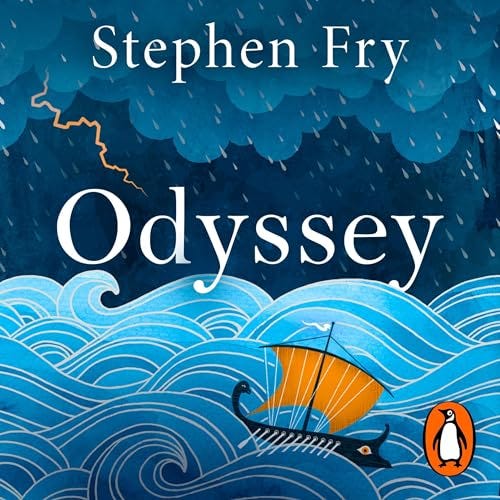
I listened to the audio version of Odyssey by Stephen Fry. Narrated by Fry himself, it’s an excellent companion text to Emily Wilson’s translation of The Odyssey. Fry’s Odyssey is the perfect complement because he doesn’t just retell the story of Odysseus, but he weaves in the related myths referenced but not fully explored in Homer’s epic. It’s exactly what you’d expect from a Stephen Fry story; erudite, witty, and entertaining.
I imagined Fry poring over an ancient version of a vessel tracking tool as ships sailed away from Troy, telling each ship’s story in turn. I particularly enjoyed the chapter “The Cursed Children” about Orestes’ revenge for the death of his father, Agamemnon, and the conclusion of his cursed family’s tale. The story culminates with a trial in Athens that marks the beginning of civic justice and the end of the gods’ roles in the everyday affairs of men. It’s in these side quests, the stories adjacent to, but not directly told in The Odyssey, that Fry’s version shines.
Highly recommended for those interested in Greek mythology and going beyond Homer, but not quite ready to pick up Aeschylus, Sophocles, or Euripides.
One last thing
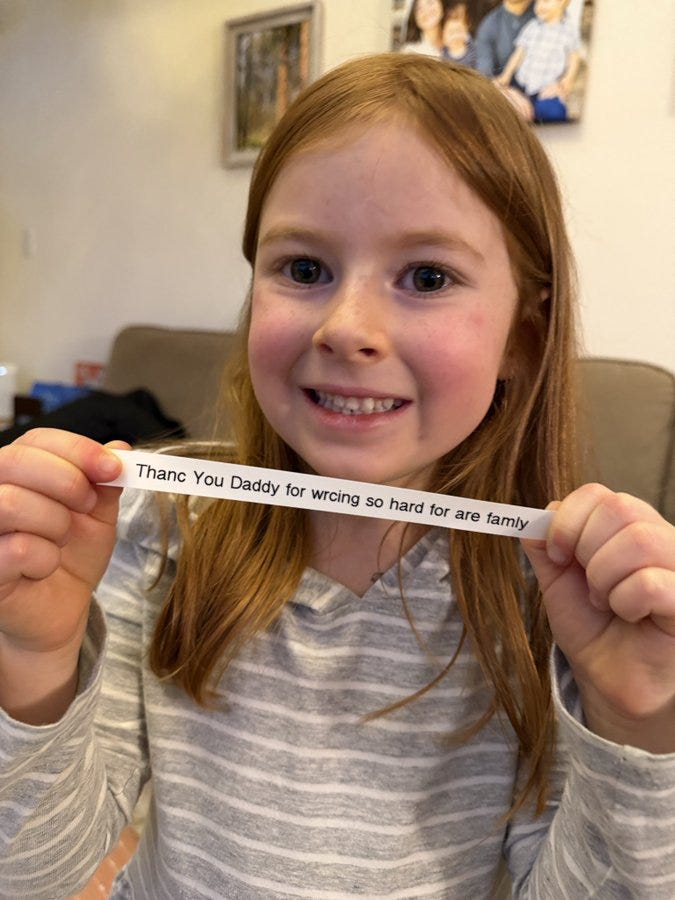
Get your early literacy stage kid a label maker (X thread):
Want more frequent updates? Follow me on Substack Notes and X.
Last year I kept a running thread of books I read on X. I’ll do the same this year, and I’ll be adding reviews on Goodreads, too. I don’t think I’ll post about every book I read in these recaps, so you can follow along on those channels if you’re particularly interested in books.